SOC 2 compliance is a framework used to evaluate whether a service organization has appropriate controls for protecting information and systems. It is particularly relevant to SaaS companies, cloud software providers, technology companies, and businesses that store or process customer data.
Enterprise customers increasingly ask SaaS vendors questions such as:
- Is your company SOC 2 compliant?
- Do you have a SOC 2 Type II report?
- How do you protect customer data?
- Who has access to production systems?
- Do you encrypt customer information?
- What happens if your service goes down?
- How do you monitor security incidents?
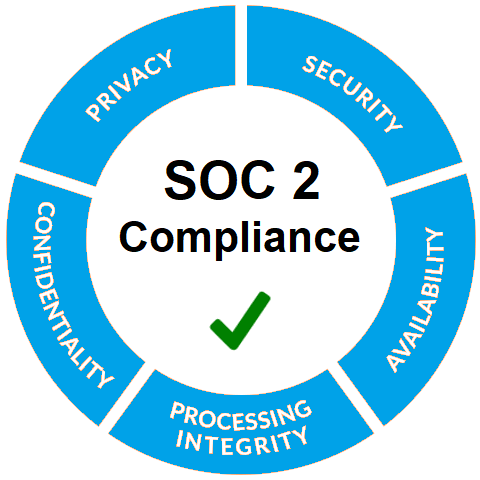
A SOC 2 examination provides independent assurance about controls related to selected AICPA Trust Services Criteria. The criteria cover Security, Availability, Processing Integrity, Confidentiality, and Privacy.
This guide explains SOC 2 in simple terms and covers the process, requirements, costs, Type I vs Type II, common controls, and what SaaS businesses should know before starting an audit.
What Is SOC 2?
SOC 2 stands for System and Organization Controls 2.
It is an AICPA reporting framework designed for service organizations that need to provide information about controls relevant to security, availability, processing integrity, confidentiality, or privacy.
The AICPA maintains the Trust Services Criteria used in SOC 2 engagements.
In simple terms:
SOC 2 helps a SaaS company demonstrate to customers that it has appropriate controls around the systems and information it is responsible for.
For example, imagine a SaaS company that stores customer information in a cloud environment.
A potential enterprise customer may want assurance that the SaaS company:
- Controls employee access
- Protects customer information
- Monitors its systems
- Manages security incidents
- Maintains backups
- Reviews access permissions
- Protects production systems
- Has appropriate policies and procedures
A SOC 2 report can provide independent assurance about the controls within the defined scope.
Is SOC 2 a Certification?
This is an important distinction.
SOC 2 is generally described as an attestation/reporting framework rather than a certification.
An independent service auditor examines the organization’s controls against applicable criteria and issues a report.
The AICPA describes SOC services as assurance reports that help users assess risks associated with outsourced services.
Therefore, saying:
“We are SOC 2 certified”
is common in marketing language, but technically it is more precise to say:
“We have completed a SOC 2 examination and received a SOC 2 report.”
Why Is SOC 2 Important for SaaS Businesses?
SaaS companies often process or store customer information on behalf of other organizations.
For an enterprise customer, choosing a SaaS vendor can therefore involve significant security and operational risk.
A procurement or security team may want evidence that the vendor has appropriate controls before approving the software.
SOC 2 can help a SaaS company demonstrate that its controls have been independently examined.
SOC 2 can help with:
- Enterprise sales
- Customer security reviews
- Vendor due diligence
- Security assurance
- Internal control processes
- Risk management
- Customer trust
- Procurement requirements
It does not eliminate security risk, but it provides structured evidence about controls within the report’s scope.
What Are the 5 SOC 2 Trust Services Criteria?
The AICPA Trust Services Criteria contain five categories:
- Security
- Availability
- Processing Integrity
- Confidentiality
- Privacy
The AICPA’s current published criteria cover these five areas.
Let’s look at each one.
1. Security
Security is concerned with protecting systems and information against unauthorized access, unauthorized disclosure, and damage that could affect the organization’s objectives.
This is the foundational category for SOC 2 engagements.
Security controls can include:
- Identity and access management
- Multi-factor authentication
- Password policies
- Access reviews
- Encryption
- Firewalls
- Vulnerability management
- Security monitoring
- Incident response
- Change management
For a SaaS company, this may cover both internal systems and production infrastructure.
2. Availability
Availability focuses on whether systems and information are available for operation and use according to the organization’s objectives.
This can be particularly relevant to SaaS companies that promise customers a certain level of service availability.
Controls may involve:
- Infrastructure monitoring
- Capacity planning
- Disaster recovery
- Backup procedures
- Incident response
- Business continuity
- System redundancy
- Recovery procedures
If your SaaS product has uptime commitments, Availability may be especially relevant to your SOC 2 scope.
3. Processing Integrity
Processing Integrity addresses whether system processing is:
- Complete
- Valid
- Accurate
- Timely
- Authorized
This can be important for SaaS applications where incorrect processing could affect customers.
For example, consider software that processes:
- Financial transactions
- Business calculations
- Customer orders
- Automated workflows
- Reports
- Data transformations
The relevant controls depend on what the application actually does.
4. Confidentiality
Confidentiality focuses on protecting information designated as confidential.
Examples could include:
- Customer business information
- Internal company information
- Proprietary data
- Contracts
- Sensitive documents
- Confidential customer records
Controls can include access restrictions, encryption, data classification, and secure data disposal.
5. Privacy
Privacy relates to personal information and how it is collected, used, retained, disclosed, and disposed of.
This can be particularly relevant to SaaS businesses handling personal information.
Privacy-related controls may involve:
- Data collection
- Consent
- Data retention
- Data deletion
- Access requests
- Privacy policies
- Data disclosure
- Personal information protection
Not every SaaS company needs every Trust Services Criteria category. The applicable scope depends on the organization’s services, commitments, risks, and objectives.
SOC 2 Type I vs Type II
One of the most common questions SaaS founders ask is:
What’s the difference between SOC 2 Type I and Type II?
The key difference is the nature of the examination.
| Feature | SOC 2 Type I | SOC 2 Type II |
|---|---|---|
| Focus | Design of controls | Design and operating effectiveness |
| Timing | Point in time | Period of time |
| Tests control operation over time | No | Yes |
| Evidence | As of examination date | Collected throughout examination period |
| Typical buyer perception | Initial assurance | More evidence about ongoing operation |
A Type I report evaluates controls as of a specified date.
A Type II report examines whether relevant controls operated effectively over a specified period.
This distinction is important for SaaS companies because enterprise customers often want evidence that security processes are actually operating consistently rather than simply existing on paper.
What Does a SOC 2 Audit Look At?
A SOC 2 examination is not simply a checklist where every company implements identical security tools.
The auditor evaluates the organization’s system description and controls against the applicable criteria.
Depending on the scope, controls may address areas such as:
Access Control
- User provisioning
- User termination
- Privileged access
- MFA
- Access reviews
Change Management
- Code changes
- Production deployments
- Approval processes
- Testing
- Version control
Risk Management
- Risk assessments
- Risk treatment
- Security responsibilities
Vendor Management
- Third-party assessments
- Vendor reviews
- Security requirements
Incident Response
- Incident identification
- Escalation
- Investigation
- Response
- Documentation
Data Protection
- Encryption
- Data access
- Data retention
- Secure deletion
Monitoring
- Security monitoring
- Logging
- Alerting
- System monitoring
The actual controls depend on the SaaS company’s environment and SOC 2 scope.
Common SOC 2 Controls for SaaS Companies
A SaaS business preparing for SOC 2 commonly reviews controls across several areas.
Identity and Access Management
The company should have a defined process for:
- Creating user accounts
- Removing users
- Changing permissions
- Managing privileged accounts
- Reviewing access
Multi-Factor Authentication
MFA can be an important security control, particularly for privileged and sensitive systems.
Companies often implement MFA across:
- Cloud infrastructure
- Source code repositories
- Administrative dashboards
- Business applications
- Security platforms
Employee Onboarding and Offboarding
SOC 2 programs typically require organizations to demonstrate that access is appropriately granted and removed.
For example:
Employee joins → Access approved → Account created → Required permissions assigned
When the employee leaves:
Employment ends → Access revoked → Credentials disabled → Assets returned
Change Management
Production changes should follow a defined process.
A typical workflow might look like:
Code change → Review → Testing → Approval → Deployment → Monitoring
The exact process varies by organization.
Security Awareness Training
Employees may need security training covering areas such as:
- Phishing
- Password security
- Data protection
- Access management
- Incident reporting
- Company security policies
Training should be documented where it forms part of the control environment.
SOC 2 Audit Process
A typical SOC 2 journey can be divided into several stages.
Step 1: Define Your Scope
First determine:
- Which product is being examined?
- Which infrastructure is included?
- Which offices or teams are included?
- What customer data is involved?
- Which Trust Services Criteria apply?
Poor scope definition can create unnecessary complexity.
Step 2: Perform a Readiness Assessment
The company reviews its existing controls against the applicable SOC 2 criteria.
This identifies gaps between:
Current environment → Required control environment
Common gaps may involve:
- Missing policies
- Excessive permissions
- Missing evidence
- Inconsistent access reviews
- Incomplete vendor management
- Weak change-management documentation
Step 3: Remediate Gaps
The organization addresses identified weaknesses.
This may involve:
- Implementing MFA
- Updating policies
- Changing access controls
- Improving logging
- Creating backup procedures
- Establishing security training
- Formalizing incident response
- Implementing vendor reviews
Step 4: Collect Evidence
Evidence is an important part of a SOC 2 examination.
Examples can include:
- Access review records
- Training records
- Change tickets
- Incident records
- Vulnerability reports
- System logs
- Backup records
- Policy acknowledgments
- Vendor assessments
For Type II, evidence must demonstrate the operation of controls during the examination period.
Step 5: SOC 2 Examination
An independent service auditor performs the examination.
The auditor reviews the organization’s system description, controls, and supporting evidence within the defined scope.
Step 6: Receive the SOC 2 Report
After the examination, the service auditor issues the applicable SOC 2 report.
The report provides information about the system and controls examined and the auditor’s conclusions under the applicable criteria.
How Long Does SOC 2 Take?
There is no universal SOC 2 timeline.
The duration depends on:
- Company size
- Number of employees
- Infrastructure complexity
- Scope
- Existing controls
- Selected Trust Services Criteria
- Audit type
- Readiness work
- Evidence requirements
A company with mature security processes may be able to prepare more efficiently than a startup building its control environment from scratch.
For Type II, the examination includes a defined period during which operating effectiveness is evaluated, so the overall timeline is naturally longer than a point-in-time Type I examination.
How Much Does SOC 2 Cost?
SOC 2 costs vary significantly between organizations.
Potential costs include:
- Readiness consulting
- Auditor fees
- Compliance software
- Security tools
- Penetration testing
- Cloud security tools
- Employee training
- Policy development
- Engineering work
- Remediation
There is no single official SOC 2 price.
For a small SaaS company, the largest expense may not necessarily be the auditor. Engineering time, security tooling, consulting, and remediation can also contribute significantly to the total cost.
Therefore, SaaS companies should build a complete compliance budget rather than looking only at the audit fee.
Do SaaS Startups Need SOC 2?
Not every SaaS startup needs SOC 2 immediately.
The decision depends on:
- Target customers
- Industry
- Customer requirements
- Data sensitivity
- Sales strategy
- Enterprise procurement requirements
- Security expectations
- Competitive environment
For example, a SaaS startup selling directly to consumers may have different requirements from a B2B SaaS platform selling to large enterprises.
If enterprise prospects repeatedly request a SOC 2 report during security reviews, obtaining one may become an important part of the company’s sales process.
SOC 2 for B2B SaaS
SOC 2 can be particularly relevant to B2B SaaS companies.
Enterprise customers may conduct vendor security assessments before purchasing software.
They may ask for:
- SOC 2 report
- Penetration testing information
- Security policies
- Data-processing information
- Business continuity documentation
- Incident response procedures
- Encryption details
A SOC 2 report can provide a standardized source of assurance for some of these questions.
However, a SOC 2 report does not automatically satisfy every customer’s security, legal, privacy, or procurement requirement.
SOC 2 vs ISO 27001
SOC 2 and ISO 27001 are both widely used security/compliance frameworks, but they are not the same.
| Feature | SOC 2 | ISO 27001 |
|---|---|---|
| Origin | AICPA | ISO/IEC |
| Main output | Attestation report | Certification |
| Focus | Controls against selected Trust Services Criteria | Information Security Management System |
| Common use | SaaS and service providers | Organizations across many industries |
| Type | Examination/report | Management-system certification |
A company may pursue both depending on customer requirements and business objectives.
Neither framework automatically replaces the other.
SOC 2 vs SOC 1
SOC 1 and SOC 2 address different areas.
SOC 1
SOC 1 focuses on controls relevant to user entities’ internal control over financial reporting.
SOC 2
SOC 2 focuses on controls relevant to:
- Security
- Availability
- Processing Integrity
- Confidentiality
- Privacy
The AICPA provides separate guides for SOC 1 and SOC 2 because they address different assurance needs.
For a typical SaaS security review, SOC 2 is often the more relevant report.
SOC 2 vs SOC 3
SOC 3 also addresses the Trust Services Criteria.
However, SOC 3 reports are designed for general use and do not provide the same level of detail as SOC 2 reports. The AICPA notes that SOC 3 reports can be freely distributed.
This makes SOC 3 useful when a company wants a publicly distributable report, while SOC 2 is generally more detailed for customers and other stakeholders who need deeper assurance information.
What Documents Does a SaaS Company Need for SOC 2?
A SOC 2 program may involve a collection of policies and procedures.
Examples include:
- Information security policy
- Access control policy
- Password policy
- Incident response policy
- Change management policy
- Risk management policy
- Vendor management policy
- Business continuity plan
- Disaster recovery plan
- Data retention policy
- Acceptable use policy
- Security awareness procedures
Policies alone are not enough.
The company also needs to demonstrate that relevant controls actually operate as described.
SOC 2 Compliance Checklist for SaaS
Use this checklist as a starting point.
Security
☐ MFA enabled
☐ Access control implemented
☐ Privileged accounts protected
☐ Regular access reviews
☐ Encryption configured
☐ Vulnerability management
☐ Security monitoring
☐ Incident response process
People
☐ Employee security training
☐ Background-check process where appropriate
☐ Employee onboarding process
☐ Employee offboarding process
☐ Security responsibilities documented
Infrastructure
☐ Cloud security controls
☐ Firewall/network controls
☐ Production environment protection
☐ Backup procedures
☐ Disaster recovery procedures
☐ Monitoring and logging
Development
☐ Secure development practices
☐ Code review
☐ Change management
☐ Production deployment controls
☐ Dependency management
Vendors
☐ Vendor inventory
☐ Vendor risk assessment
☐ Security requirements
☐ Periodic vendor reviews
Governance
☐ Security policies
☐ Risk assessment
☐ Evidence collection
☐ Management review
☐ Incident documentation
Common SOC 2 Mistakes
Treating SOC 2 as a Documentation Project
Creating policies without actually implementing the controls is a major problem.
SOC 2 is about the control environment, not just having documents.
Starting Too Late
If a major enterprise customer suddenly asks for a SOC 2 Type II report, a SaaS company may not be able to produce one immediately.
Preparation can require substantial time.
Giving Excessive Access
Too many employees with privileged access can increase security risk and complicate access reviews.
Ignoring Evidence
A company may perform a security activity but fail to retain evidence showing that it occurred.
Evidence should be generated and retained as part of normal operations.
Using One Generic Policy for Everything
Policies should reflect how the company actually operates.
A policy that says one thing while employees and systems operate differently can create problems during an examination.
Treating SOC 2 as a One-Time Project
Security controls need to continue operating after the report is issued.
For companies maintaining an ongoing compliance program, control operation, evidence collection, and periodic reviews become part of normal business operations.
How to Prepare for SOC 2
A practical approach is:
Phase 1 — Understand
Identify:
- Customers
- Data
- Systems
- Infrastructure
- Risks
- Applicable criteria
Phase 2 — Assess
Compare current controls with the applicable requirements.
Phase 3 — Build
Implement missing controls.
Phase 4 — Operate
Run the controls consistently.
Phase 5 — Collect Evidence
Automate evidence collection where practical.
Phase 6 — Audit
Work with the independent service auditor.
Phase 7 — Maintain
Continue operating and reviewing the controls.
Can SOC 2 Improve SaaS Sales?
SOC 2 can be useful during enterprise sales because prospective customers may use security assurance information during vendor evaluation.
However, SOC 2 should not be viewed as a guarantee that a company is completely secure.
Instead, it provides assurance about the controls and scope described in the report.
Customers should still review:
- Report scope
- Examination period
- Exceptions
- Complementary user entity controls
- Subservice organizations
- Management’s description
- Auditor’s opinion
This is particularly important when a SaaS vendor provides a SOC 2 report during procurement.
What Should Customers Check in a SaaS Company’s SOC 2 Report?
If you are evaluating a SaaS vendor, don’t simply ask:
“Do you have SOC 2?”
Also consider asking:
1. Is it Type I or Type II?
Type II provides information about the operation of controls over a period.
2. What is the examination period?
Check how recent the report is.
3. What systems are included?
The report may cover only a particular product, service, or environment.
4. Which Trust Services Criteria are included?
Check whether the report covers the criteria relevant to your use case.
5. Were there exceptions?
Review any control exceptions and understand their relevance.
6. Are there complementary user entity controls?
Some controls may require actions from the SaaS customer’s side.
7. Which subservice organizations are involved?
Cloud infrastructure and other third-party services may be part of the SaaS environment.
Frequently Asked Questions
What does SOC 2 stand for?
SOC 2 refers to a System and Organization Controls report focused on controls relevant to security, availability, processing integrity, confidentiality, and privacy.
Is SOC 2 mandatory?
SOC 2 is not a universal legal requirement for every SaaS business. Whether a company needs it depends on its customers, industry, contracts, risk environment, and business requirements.
Is SOC 2 the same as ISO 27001?
No. SOC 2 and ISO 27001 are different frameworks with different structures and outputs.
What is SOC 2 Type II?
SOC 2 Type II evaluates whether relevant controls were suitably designed and operated effectively over a specified period.
How long does SOC 2 Type II take?
There is no single timeline. Preparation and examination length depend on the company’s scope, maturity, controls, auditor, and examination period.
Does SOC 2 guarantee security?
No. SOC 2 provides assurance about controls within the defined scope and period. It does not guarantee that a company can never experience a security incident.
Is SOC 2 useful for startups?
It can be, particularly for startups selling B2B SaaS to larger customers. The business case depends on customer requirements and sales strategy.
What is the difference between SOC 2 and SOC 3?
SOC 2 reports provide detailed information for intended users, while SOC 3 reports are designed for general use and can be publicly distributed.
Final Thoughts
SOC 2 has become an important part of security assurance for many SaaS and technology businesses.
It gives organizations a structured way to demonstrate that relevant controls exist and, depending on the report type, that those controls operate effectively over time.
For SaaS businesses, the process generally involves:
Define scope → Assess controls → Fix gaps → Operate controls → Collect evidence → Independent examination → Maintain controls
The most important point is that SOC 2 should not be treated as simply a document or badge for a website.
A useful SOC 2 program should become part of the company’s everyday approach to:
Security + Access Control + Data Protection + Monitoring + Risk Management + Business Continuity
For a SaaS company targeting enterprise customers, understanding these requirements early can make security and compliance easier to incorporate as the business grows.